Cebu blue is a species of vining plants with textured and impressive foliage. With good maintenance, these indoor lovelies can be a good choice for beginners.
Knowing a Cebu Blue Pothos
A Cebu blue pothos is an Epipremnum pinnatum genus member of plants. Therefore, it is a variety of pothos. It is a unique vining plant with a silver tint, and green-blue leaves. Unlike the variegated forms, blue Cebu develops leaf splits and leaflets along the leaf margins.
It is one of the plants kept for its natural capability to clean and purify the air indoors. Besides, it can instantly transform bedrooms and private study rooms.
An easy-to-grow and highly adaptable indoor plant, it’s really enviable for its stunning foliage.
Plant Origins
Cebu is the name of an Island in the Philippines. Therefore, the name Cebu Blue Pothos. It is perhaps due to this reason the plant’s popularity has grown in recent times.
Growing Rate
This one is really one of those slow growers. If you’re impatient you might think it is not growing. If your home can easily provide optimal conditions, keeping and managing this beauty is enjoyable.
Key ID Features
Identifying the plant does not require plant knowledge. It is easier to tell it when it matures.
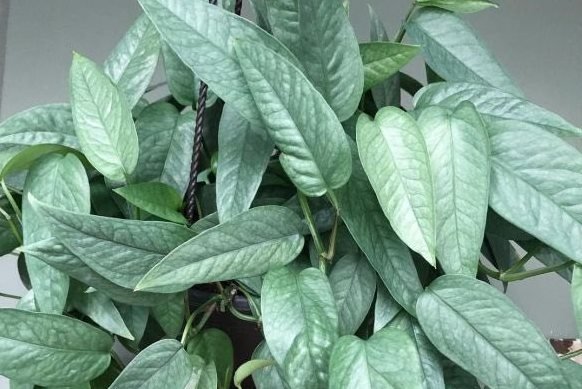
If you spot a young one, the leaves appear elongated with silvered slightly darker leaves.
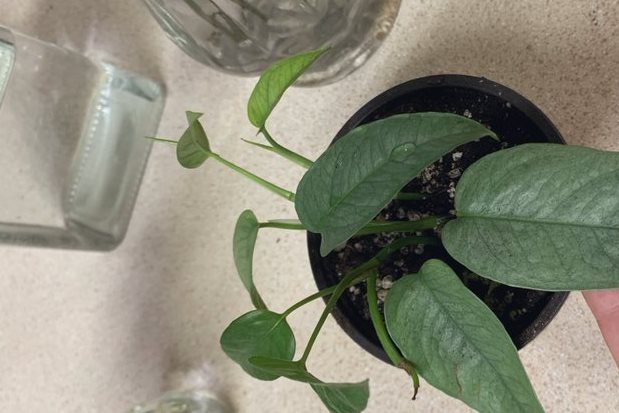
Healthy adult ones have characteristic “zed-zed shape” pinnate (split) leaves. It can take longer for the plant’s leaves to completely split.

The Rarity of Cebu Blue Pothos
Is it easy to find a cebu blue pothos? Until recently, this plant is still somewhat rare and cannot be found in stores so easily.
Anyway, you can still find and own one if you can place an order online. If you are in the US, a young plant can cost about $20. We have listed the reputable online seller companies and outlets below.
How to Care for your Cebu blue Pothos
The pothos can range in colors of green, blue, or silver depending on the conditions that have been provided. Below are easy care guides to have fun while maintaining a Cebu.
Light Lumens for Blue Cebu
The silver-leafed blue pothos can tolerate indirect medium light levels. If you want it to keep performing greatly, keep your houseplant in bright indirect light spots.
How much light does a Cebu blue need? Situate your plant where it receives 6 hours of daily indirect bright light.
If your home or region cannot receive about 4000 lux, invest in growing LED lamps. Additionally, it is a great idea to have your plant enjoying the morning direct light. However, you need to be careful as extended exposures can ruin the growth progress.
Otherwise, if you live in the tropics, you can grow this stunning plant quite easily. Where can you situate your houseplant?
Are you located in regions along the equator?
- Northern-facing windows are the plant’s most preferable spots
- In early mornings, locate your plant 3 or so inches off East facing window
To further aid the plant’s ability to trap light, clean the foliage once a month. Simply wipe the leaves with cold water using a soft clean cloth.
Watering a Cebu
Watering your Cebu plant should be as simple as keeping and updating a diary. For your plant to establish well, it requires quality water.
Mineral-free water is the best for most of your houseplants. But you can use settled rainwater or tap water. Serve your potted plants with water kept at room temperature.
Before watering your plant, ensure you are conscious of the soil moisture status. For brief moments, poke your index finger or wooden skewer into the top few inches. You don’t need to drink it if your finger or stick comes out with dirt.
Flushing your pot will benefit the plant a lot. In addition to removing salts, doing so hydrates the plant roots.
In essence, a blue Cebu pothos requires thorough watering. Always allow the top inch of soil to dry out completely before watering again.
Feeding (Fertilizer) your Cebu Blue
The most convenient way to fertilize is when watering. Use a dilute water-soluble indoor houseplant fertilizer.
Keep in mind you need to feed your plant during the growing season. During the winter, you’ll definitely cut back water.
For stunning results, select a complete fertilizer—one with macronutrients and micronutrients. If you are not sure about diluting, go for ready-to-use from a local store or online seller.
Potting Medium (Soil + Soilless Mix) for your Cebu
In their natural growing habitats, the Cebu Blue loves less acidic soil. This houseplant can freely explore both soilless mixes and soil bases. It is not as such, picky when it comes to soil.
Seemingly, a quality indoor potting mix can be used to grow this stunning plant. Even though, for more convenient indoor gardening, you’ll need a well-draining mix or blend.
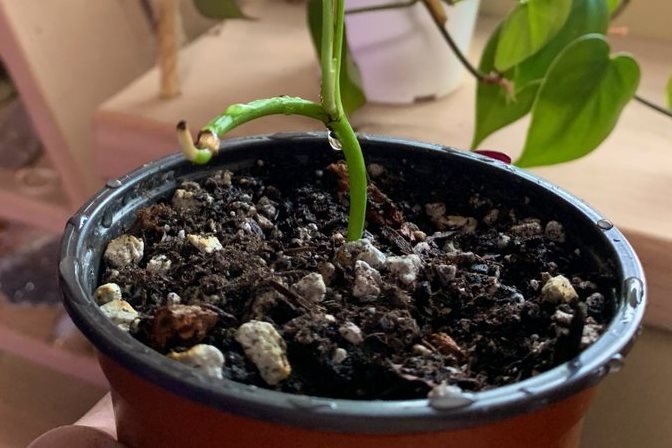
Why? With most tropical plants grown indoors, overwatering can be a weakness. But you don’t want to expose this tropical vine to root rot.
What do you do? Make a simple and quick DIY mix. Combine 3 parts of cactus potting mix and 1 part perlite.
Temperature-humidity Optimal for Cebu
A well-regulated household warmth healthy for humans can comfortably suit a cebu plant.
Your plant won’t have problems when indoor conditions are balanced. However, it becomes cooler during the winter. As a result, humidity levels drop. You need to increase indoor humidity. You can do that quite easily.
- Use a pebble tray or humidifier
- You may need handy tools to up your game
- Or simply group your blue Cebu with other plants
This one thrives between 55°- 80°F (12.7 – 26.7 Celcius degrees). All in all, keep it away from the constant cold drafts and heat vents.
Replanting your Cebu Blue Pothos
Replanting/repotting your houseplant encourages healthy growth and performance.
How do you tell it is about time to transplant your pothos? These houseplants can grow fast depending on how you treat and handle them. They are neither slow nor fast growers.
If you bought yours in 4” pots, ensure the plant has a well-draining rooting medium. A smaller pot requires you to pay attention after the 12th month.
Here are clues for repotting a cebu plant:
- When roots start peeping out of the drainage holes
- Best replant during the spring or summer
- If your plant seems to have stopped growing
How-to quick repotting tips:
- Prepare and ready your new potting soil/blend
- Do not disturb the roots so much
- Replant your cebu Blue pothos once every 2 years
- Move your plant to a 2” larger pot with sufficient drainage holes
Do Cebu Blue Pothos Grow Fast?
Cebu blue pothos typically grows slowly. However, rewarding plant care habits can get yours to mature quickly. Otherwise, if you neglect it this houseplant will seem not to increase.
Growing New Cebu Blue Plants
Growing new plants from your own cebu that you’ve raised promotes quick adaptability. There are two common ways of starting and raising new ones. By water and direct soil propagation.
Whether you go for water or soil propagation, select and prepare mature and healthy material.
- Cut off 6 – 8 inch stems
- Remove lower leaves
To enhance success, go for the easy methods as highlighted below.
Propagating in Sphagnum Peat Moss + Perlite
How do you propagate a cebu blue in this soilless mix? Being high water retention ingredients makes these two suitable for growing new plants.
Simply cut your top part mature stem cuttings and insert 2 inches deep into your mixture. Keep them in a warm room for at least 2 weeks. In the second week cover your buried cuttings with a plastic bag.
This process does not require that you dip the prepared stem cutting in the rooting hormone. After the second week, try giving each cutting a slight pull or tug. This would help you tell if there are new roots growing.
Water Propagation of Cebu Pothos
You can propagate this plant more easily using water. With this method, you can cheaply monitor the progress of the stem cuttings.
Generally, plants transplanted experience a bit of shock when they are first rooted in water. These ones tend to respond to transplant shock better.
FAQs about the Cebu Pothos
Here are a few commonly asked questions:
Is Cebu a True Pothos?
Native to Cebu Island, this one is a unique variety of pothos. It is part of the plant genus Epipremnum but not a philodendron.
Can I make my Cebu Blue Pothos Fuller?
Making your houseplant fuller means you feed it well and fertilize it during the growing season. Feed your houseplant using specially formulated plant food Dyna-Gro 9-3-6.
Feeding your houseplant alone will not help the plant get fuller. Pruning and propagation are also additional tips to encourage it to get fuller.
Why is my Cebu Blue Turning Yellow?
If you spot some faded yellow leaves on one side of the plant, it could be a sign of unidirectional lighting.
Leaves of this houseplant will also turn yellow in case you are underwatering it. Notably, they’ll feel crispy and start wilting.
Flooding your plant’s pot may also lead to yellowing leaves. In this case, your plant will not have crispy areas on the foliage. The affected leaves normally lose their shimmery quality. The whole plant will die as a result.
It is normal when 1 or two leaves naturally turn yellow but the plant remains healthy.
Other issues closely related to leaves yellowing include:
- Stems becoming leggy
- Leaves drooping
Hanging Pots vs. Staking Cebu Blue Pothos
Should you grow a Cebu blue houseplant in hanging pots or stake it? With either choice come the bright side and negative growth aspects.
On one hand, having this pothos in a hanging pot means that you limit their growth further.
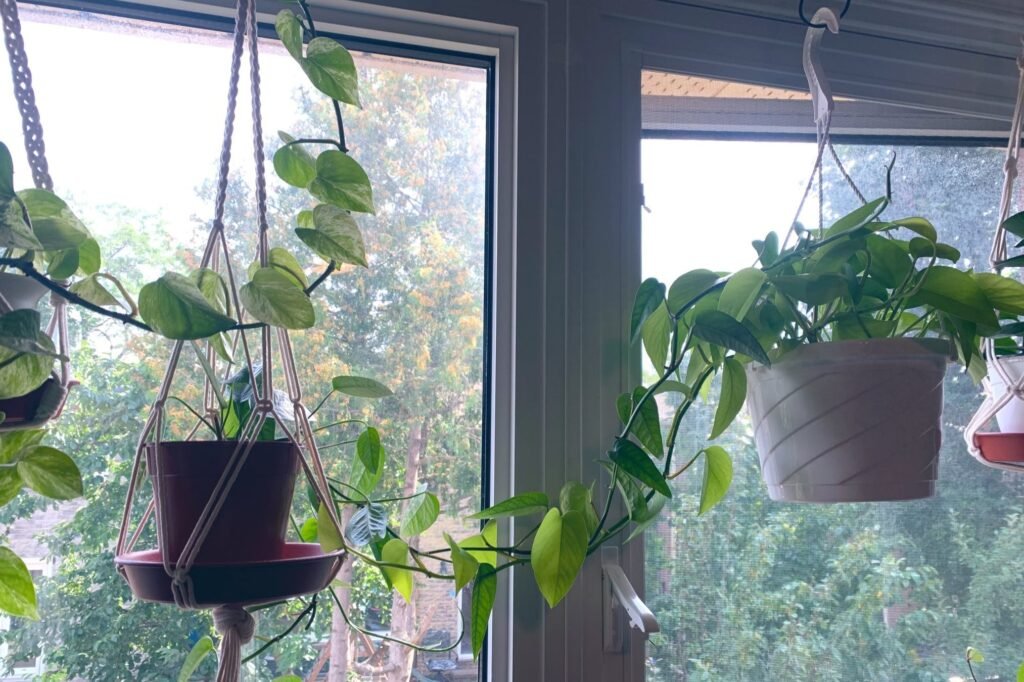
With the hopeful prospect that your hanging Cebu will dangle, your plant will seem to get stuck. There is no substantive growth shown by the plant. Ultimately, your houseplant won’t bring out the aesthetic value any hanging pot ought to bear.

As opposed to hanging, staking your cebu encourages natural growth. You end up with a more beautiful and magnificent houseplant. Supporting it means you have a more satisfying growth pattern. For instance, you can control foliage size and volume as you desire.
How Long does it take a Cebu to Mature?
To reach maturity, Cebu blue pothos can take nearly 2 decades (20 years). With up-to-date care, you should see complete leaf splits around its maturity time.
Keep in mind, that staking your houseplant only encourages faster growth. For it to flourish, give it bright indirect light, quality propagating mix, and ample humidity.
Cebu Blue Pothos for Sale
Follow these links for more on the plant sale. Note that some sellers have information on the houseplant’s size and availability.
- Rooted Cebu Blue RARE Pothos Epipremnum Pinnatum 2 CUTTINGS House Plant – eBay
- Grown cebu blue pothos of varying sizes – Amazon
- Rare Cebu Blue Pothos – Epipremnum Pinnatum – 4″ Hanging Basket – Hirt’s Gardens
The best buy you could make are those rooted cuttings. Just follow the care details and see them grow.
References & Sources
- Epipremnum Cebu Blue. Aroid Cultivar Registry. https://www.aroidcultivars.org/aroid-cultivars/epipremnum/cebu-blue. Accessed online 25 Jan 2023
- USDA Plant Hardiness Zone Map. FastGrowingTees.com. https://www.fast-growing-trees.com/pages/usda-hardiness-zone-map. Accessed online July 25, 2022
- Epipremnum pinnatum (L.) Engl.
- centipede tongavine. Natural Service Conservation Service. https://adminplants.sc.egov.usda.gov/java/profile?symbol=EPPI. Accessed online 25 Jan 2023


