Do you grow new Maranta plants from cuttings, by root division or from seeds? These means of raising new prayer plant generations are practical. However, stem cuttings and root division often outweigh growing from seeds. It is worth noting that the main objective is to produce young replica of the same species, but healthy ones.
Growing from cuttings is more common. You can achieve new growths easily and faster, with much higher success. Besides getting your exact prayer plant species, you also want to control overgrowth or crowding.

Propagation by Root Division
The most inexpensive and simple way to have your new plants is by division. You can easily and conveniently divide up your houseplants.
Here are tips on when to divide up your Maranta houseplant.
- Top sprouts crowded or clumped
- Prayer plant exhibiting moment stress signs (wilting upon watering, yellowing lower leaves, etc.)
- Roots start to congest the pot space or loo out through the drainage holes (outgrow)
What you need: fresh compost, sharp knives and containers.
Preps: Cut down on the amount of water on the last 4 watering schedules.
To start the division process, wet the pot edges (if necessary) and carefully remove your prayer plant from its pot.
- Cut off the dried parts – leaves and older stems
- Check the roots for signs of disease
- Hold your plant by the soil and try separating a complete healthy stem+root part
- Alternatively use the knife to make the separation easier
- Immediately plant it (them) into the fresh compost and water
The faster you can carry out the above steps will save your new plant from drying out. Propagation by division success is higher in springtime. Preferably that is when your plant has become dormant or after it has flowered. Or want to repot it.
Using Stem Cuttings
Another easy means of growing your own new Marantas is the use of stem cuttings. Unlike root division, with cuttings, you can’t grow them directly in pots. Instead, roots are first induced.
With stem cuttings, you can choose to use water or submerge the prepared cultivar directly in moist soil. You don’t need much to embark on your project.
a) Water Propagation
What you need:
- Gardening gloves
- Cool (room temp) water
- fresh propagation soil
- pair of scissors
- glass jars/shallow container
Put on gloves, cleanse your pair of scissors then cut a few selected stem cuttings at their bases.
- Cut your stems inches off the bottom node
- Remove all the leaves + sheaths that get submerged
- Place each cutting in a glasses
- Move them to bright (1000+ lumens) rooms
- Keep the household environment humid and maintain warmth at room temperature

Closely monitor the glass water levels. Either replace the glass water or refill them back when water goes lower than initial levels. Then transfer the rooted cuttings to propagation soil after a few weeks.
b) Direct Soil Propagation
Preps: Have a good number of cuttings. (With this method you won’t be able to visibly check the progress or see the growth of roots.)
Remove the leaves from the lower node cuttings. (2 upper leaves are enough for photosynthesis.) Then burry the first node together with its inch-long stem part in a shallow container. Place your container in bright rooms. Keep the soil moist, maintain warmth and closely examine the stem health.
After a few weeks, pull out a single stem to determine whether roots have formed. Be patient until the roots are at least 2 inches long. Then transfer them to pots.
Prayer Plant Propagation by Seed
Can you propagate these unique houseplants from their seeds? I love growing from seeds.
Gardeners, plant producers and nurseries rarely grow Maranta from seeds. The seeds are so tiny. Consequently, this can affect their viability and germination. Some varieties take years to bear flowers.
Anyway, if you’re enthusiastic, you can be the first to experiment. Is it possible to forge a new prayer plant generation from seed?
Since Maranta is a flowering plant, it is quite possible to grow new plants from seeds. However, you have to exceedingly practice growing with patience. This means that to grow from your own plants, you need to wait until after they bloom. Or you can buy seeds if you’re on a budget.
You’ll be so fortunate to eventually see a Maranta houseplant flower. And preparing and sowing their seeds won’t be a hustle. I bet.
1. Harvest the Seeds
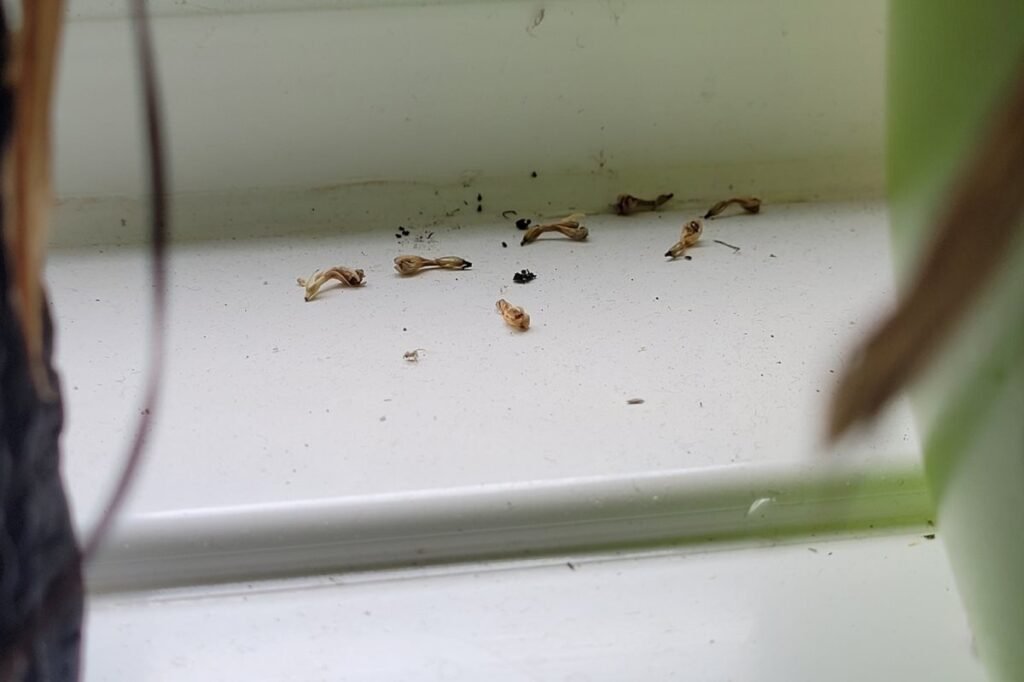
Allow time for flowers to dry and disintegrate. When mature, they are brown or dark tiny seeds. You don’t need to dry them, soak or do whatever. Just collect your seeds in a clean environment.
2. Sow the Maranta Seeds
All you need is a moist propagation mix and shallow pot in the appropriate ratio.
- 1/2 part of good compost
- 1 part peat moss
- 1 part perlite
Use a propagator to help bring the warmth of your mix to 65 °F. You may also place your mix on the window sill. Then sow your seeds shallowly. Keep the medium moist. Maintain warmth around regions of 55°F – 65°F (Fahrenheit degrees).
If you stay in cooler areas, you may want to cover the seeds with plastic bags or seedling tray lids. Doing this will aid their germination. Keep them in a humid environment until they become viable seedlings.
Remember that the more seeds you have, the higher the chances of getting seedlings.
3. Acclimatize Seedlings
Help your young seedlings adapt to existing growing conditions by hardening them off. This is more crucial if you live outside plant hardiness zone 9 – 11. For instance, you can gradually start exposing your Maranta species to less humid surroundings.
Closely monitor the growth of your seedlings. You’ll tell if your prayer plant can better adapt to different growing conditions with time.
Tips to Enhance Propagation
From cultivar selection to transferring your new-to-be plants, you can back up the process for the best results and high propagation success.
a) Examine the Health of Mother Maranta
It is always safe to select your propagation material from a mother plant that’s healthy and disease-free. To avoid repeated or failed propagation, go over the following.
- Check for multiple prayer plant leaf, browning, wilting or drying
- Have a close look at signs of curling leaves, pests or disease
- Avoid mother plants with malformed stems
- If you’re doing root division, avoid those with smelly roots
b) Provide Microclimatic Environment
Prayer plants are sensitive to changes in temperature and humidity. Cover the new Maranta growths with clear plastic bags. This helps maintain and lock moisture.
c) Promote Better Rooting
Although not a must-do, dipping the cuttings in a rooting hormone solution can enhance rooting. Doing so is a bonus for damaged sections of the nodes on stem cutting or roots (root division)
d) Propagate in Early Spring
The ideal time of the season to propagate your houseplant is during spring (early springtime preferable). Warm conditions for growth also favor germination while stimulating cuttings to the root.
Cull your New Plants
Avoid grouping them (especially seedlings) with other houseplants. In case of an insect or disease outbreak, the young, newly grown Maranta have a chance to escape growth issues.
Maranta Species for Propagation
A few species of Maranta are popularly cultivated as houseplants. You may still encounter problems while propagating your favorite ones. To evade issues while growing new prayer plants, go for easy growers (species) best suited to your region.
Here are my top three.
- Red prayer plant
- Black Maranta
- Green Prayer plant

Growing prayer plants from seeds isn’t difficult. It is instead a time-consuming process or just unreliable. Sometimes, the mother prayer plant could fail to bloom.
Propagating prayer plants from stem cutting leads to appreciation. Whether you want to grow new plants to keep purifying indoor air or light up your living space.


